







100 Ton Double Girder Gantry Crane
Product Introduction
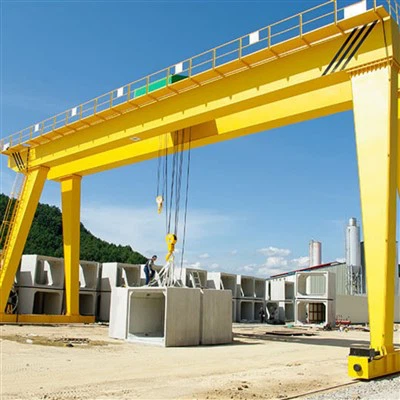
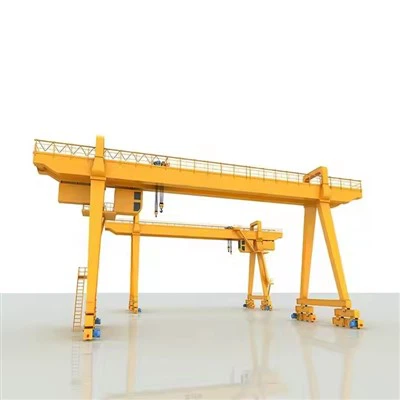
A 100-ton double girder gantry crane is a heavy-duty lifting solution designed for handling extremely heavy loads in industrial, construction, shipping, and manufacturing environments. It consists of two parallel girders supported by legs that run on rails or wheels, allowing the crane to move along a predefined path.
Key Features
High Load Capacity – Designed to lift and transport loads up to 100 tons safely.
Double Girder Structure – Provides superior strength and stability compared to single girder cranes.
Flexible Movement – Can operate on ground rails or wheels, making it suitable for outdoor and indoor applications.
Customizable Span & Height – Adjustable span (distance between legs) and lifting height to meet specific operational needs.
Robust Hoisting Mechanism – Equipped with powerful wire rope hoists, trolleys, and hooks for efficient load handling.
Advanced Controls – Available with pendant, radio remote, or cabin-operated controls for precision handling.
Safety Features – Includes overload protection, limit switches, emergency stop, and anti-collision systems.

Pictures & Components
A 100-ton double girder gantry crane is a heavy-duty lifting system used in industries like shipbuilding, construction, steel handling, and large-scale manufacturing. Below are its key components:
1. Main Gantry Structure
Girders (Bridge Beams) – Two parallel heavy-duty girders support the crane's load.
Legs/End Carriages – Vertical supports (fixed or adjustable) that hold the girders and move along rails.
Cross Beams – Reinforce the structure for stability.
 .
.
2. Hoisting Mechanism
Electric Hoist/Winch – Lifts and lowers the load (typically 100-ton capacity).
Wire Rope & Hook Block – Steel cables and a heavy-duty hook for load handling.
Drum Assembly – Winds/unwinds the wire rope for lifting.

3. Trolley & Travel System
Trolley Frame – Moves along the girders for horizontal load positioning.
Trolley Wheels & Drive – Motorized system for smooth movement.


4. Crane Travel Mechanism
Wheels & Rails – The entire gantry moves on rails (ground-mounted or elevated).
Drive Motors & Gearboxes – Power the movement along the runway.
5. Electrical & Control System
Control Panel – Houses electrical components (VFDs, contactors, PLCs).
Operator Cabin/Pendant Control – Allows remote or cabin-based operation.
Limit Switches & Sensors – Prevent overloading and ensure safe travel limits.
6. Safety Components
Overload Protection – Prevents lifting beyond capacity.
Brakes – Emergency and service brakes for hoist and travel.
Anti-Collision System – For multiple cranes in the same area.
Buffer & Bumpers – Absorb impact at travel limits.
 |
 |
 |
7. Optional Features
Cabin or Radio Remote Control – For operator convenience.
Festoon/Cable Reel System – Manages power cable movement.
Magnetic or Grab Attachments – For specialized lifting (steel plates, scrap).
 |
 |
 |
Motor
A 100-ton double girder gantry crane typically requires multiple motors to handle hoisting, trolley travel, and gantry (bridge) travel. The exact motor specifications depend on factors like lifting speed, span, working duty (FEM/ISO classification), and voltage supply. Below are general motor specifications for such a crane:
1. Hoisting Motor (Main Lift)
Power: ~30–60 kW (depends on lifting speed)
Type: AC (induction or variable frequency drive-controlled) or DC (for precise control)
Speed: ~5–20 m/min (adjustable via VFD)
Brake: Electromagnetic fail-safe brake
Duty Class: FEM 1Dm (Heavy Duty) or FEM 2m (Moderate Duty)
2. Auxiliary Hoisting Motor (Optional)
Power: ~15–30 kW (for lighter loads)
Speed: ~10–30 m/min
3. Trolley Travel Motor (Cross Travel)
Power: ~2 × 5–15 kW (twin motors for synchronization)
Speed: ~20–40 m/min
Brake: Hydraulic or electromagnetic
4. Gantry Travel Motor (Long Travel)
Power: ~2 × 10–30 kW (4 motors total, 2 per side)
Speed: ~20–60 m/min (depends on span and rail conditions)
Brake: Rail clamps or disc brakes

.
Sound and light alarm system & limit switch
A 100-ton double girder gantry crane typically includes critical safety systems such as a sound and light alarm system and limit switches to ensure safe operation. Below is an overview of these components:
1. Sound and Light Alarm System
The alarm system alerts personnel when the crane is in operation or when a fault occurs.
Functions:
Start-up Warning: Activates before crane movement (horn + flashing light).
Overload Alarm: Triggers if the load exceeds 100-ton capacity.
Emergency Stop Warning: Sounds when an emergency stop is activated.
Power Failure Alarm: Alerts if power is lost.
Components:
Rotating Beacon Light (Flashing LED) – High visibility (red/yellow).
Electric Horn or Buzzer – Loud audible warning (≥85 dB).
Control Relay & Sensors – Integrated with the crane's PLC/safety circuit.
2. Limit Switches
Limit switches prevent the crane from over-traveling beyond safe limits.
Types of Limit Switches in a Gantry Crane:
Hoisting Limit Switch
Prevents over-hoisting (upper limit) and ensures the hook doesn't crash into the trolley.
May include a lower limit switch to avoid slack rope conditions.
Trolley Travel Limit Switch
Stops trolley movement at both ends of the girder.
Gantry Travel Limit Switch (End Travel)
Prevents the gantry from moving beyond rail limits (collision avoidance).
Anti-Collision Limit Switch (if multiple cranes operate in the same area)
Common Limit Switch Types Used:
Mechanical Lever-Type – Physically triggered by crane motion.
Rotary Encoder-Based – For precise positioning.
Proximity (Magnetic/Inductive) Switches – Non-contact, durable.

10.Safety Devices
A 100-ton double girder gantry crane is a heavy-duty lifting machine used in industries like shipbuilding, steel handling, and large-scale construction. To ensure safe operation, it must be equipped with multiple safety devices. Below are the key safety features typically installed:
1. Overload Protection Device
Prevents crane operation if the load exceeds 100 tons (rated capacity).
Cuts off power or triggers an alarm when overloaded.
2. Limit Switches
Hoisting Limit Switch: Stops the hoist when the hook reaches the upper/lower safe limit.
Gantry Travel Limit Switch: Prevents the gantry from moving beyond the designated track ends.
Trolley Travel Limit Switch: Stops the trolley at the extreme ends of the girders.
3. Emergency Stop (E-Stop)
Allows immediate shutdown via push-button stations located on the crane and remote control (if applicable).
4. Anti-Collision System
Used when multiple cranes operate in the same area to prevent collisions (infrared/sensor-based).
5. Windproof (Anti-Wind) Devices
Rail Clamps / Anchors: Secure the gantry crane during high winds.
Anemometer: Measures wind speed and alerts the operator if it exceeds safe limits.
6. Braking Systems
Fail-safe brakes on hoist, trolley, and gantry motion to prevent unintended movement.
Hydraulic or electromagnetic brakes for smooth stopping.
7. Load Moment Indicator (LMI)
Monitors load weight and boom angle (if applicable) to prevent tipping.
8. Voltage Protection & Phase Sequence Protection
Prevents damage from power fluctuations or incorrect phase connections.
9. Safety Hook & Latch
Ensures the load does not slip off the hook during operation.
10. Warning Alarms & Lights
Audible alarms before startup/movement.
Flashing beacon lights for visibility in busy workspaces.
11. Insulated & Grounded Electrical Systems
Prevents electrical hazards (short circuits, shocks).
12. Redundant Rope / Chain Safety
Backup wire ropes or chains in case of primary failure.
13. Operator Cabin Safety Features
Fire extinguisher, emergency exit, and ergonomic controls.
14. Buffer & Bumper Devices
Absorbs impact when the crane approaches track ends.
11.Control Mode
A 100-ton double girder gantry crane typically employs multiple control modes to ensure safe, efficient, and flexible operation. Here are the common control methods used:
1. Pendant Control (Push Button Pendant)
Operation: The crane is controlled via a handheld or fixed pendant with buttons for hoisting, trolley movement, and gantry travel.
Best for: Short-distance, precise operations where the operator needs to be near the load.
Advantages: Simple, cost-effective, and reliable for manual control.
2. Radio Remote Control (Wireless)
Operation: Uses a wireless remote control (RF or Bluetooth) for crane operation from a safe distance.
Best for: Large work areas where the operator needs mobility.
Advantages: Improves safety by allowing the operator to move freely and avoid hazardous zones.
3. Cabin Control (Operator Cabin)
Operation: An operator sits in a cabin mounted on the crane for direct control.
Best for: Heavy-duty, long-duration operations requiring high precision.
Advantages: Better visibility and ergonomics for continuous operation.
4. Semi-Automatic & Automatic Control
Operation: Uses PLC (Programmable Logic Controller) and sensors for automated movements (e.g., preset lifting paths, anti-sway systems).
Best for: Repetitive tasks (e.g., loading/unloading in factories, shipyards).
Advantages: Reduces human error, increases efficiency, and enables smart crane features.
5. Computerized Control (Overhead Crane Software)
Operation: Integrated with SCADA systems or crane management software for monitoring and control via a central computer.
Best for: High-precision industrial applications (e.g., steel plants, automated warehouses).
Advantages: Enables data logging, remote diagnostics, and predictive maintenance.

12.Sketch

Main technical

Advantages
A 100-ton double girder gantry crane is a heavy-duty lifting solution designed for high-capacity applications in industries like shipbuilding, steel fabrication, construction, and large-scale manufacturing. Here are its key advantages:
1. High Load Capacity & Durability
Designed to handle 100 tons or more, making it ideal for heavy-duty lifting.
Double girder construction provides superior strength compared to single girder cranes.
2. Greater Span & Coverage
Can cover a wide work area (depending on rail span), suitable for large workshops, outdoor yards, or ports.
Allows movement of heavy loads over long distances efficiently.
3. Enhanced Stability & Safety
Dual girders distribute weight evenly, reducing sway and improving load control.
Equipped with anti-sway technology, overload protection, and emergency brakes for safe operation.
4. Customizable Features
Adjustable lifting height, span, and trolley speed based on application needs.
Options for manual, electric, or remote-controlled operation.
5. Versatility in Applications
Suitable for indoor and outdoor use (with weather-resistant options).
Used in steel plants, shipping ports, power plants, and bridge construction.
6. Reduced Maintenance & Long Service Life
Robust steel construction ensures long-term reliability.
Requires less maintenance compared to lighter cranes due to heavy-duty components.
7. Higher Hook Height
Double girder design allows for more hook height compared to single girder cranes, useful for tall loads.
8. Smooth & Precise Load Handling
Advanced variable frequency drives (VFDs) ensure smooth acceleration/deceleration, minimizing load swing.
Ideal for precision lifting in sensitive environments.
Conclusion
A 100-ton double girder gantry crane is a powerful, stable, and efficient solution for heavy lifting needs, offering durability, safety, and flexibility for industrial applications.
Application:
A 100-ton double girder gantry crane is a heavy-duty lifting solution designed for handling extremely heavy loads in industrial, construction, shipping, and manufacturing environments. Below are its key applications, features, and benefits:
Applications of a 100-Ton Double Girder Gantry Crane
Heavy Machinery Manufacturing
Used in factories for lifting large machine components, presses, and industrial equipment.
Ideal for assembly lines requiring precise positioning of heavy parts.
Shipbuilding & Repair Yards
Lifts ship engines, hull sections, and other massive marine components.
Facilitates movement of materials in dry docks and shipyards.
Steel & Metal Processing
Handles steel coils, beams, and large metal castings.
Used in foundries and rolling mills for material transfer.
Power Plants & Heavy Construction
Installs turbines, generators, and transformers.
Assists in bridge construction and large-scale infrastructure projects.
Logistics & Port Operations
Loads/unloads heavy containers, machinery, and oversized cargo.
Used in freight yards and heavy-duty material handling.
Aerospace Industry
Moves large aircraft parts, engines, and fuselage sections during assembly.
Crane production procedure
The production procedure for a 100-ton Double Girder Gantry Crane involves several key stages, from design and material procurement to fabrication, assembly, testing, and delivery. Below is a detailed step-by-step breakdown of the production process:
1. Design & Engineering
Customer Requirements Analysis: Determine span, lifting height, working class (FEM/ISO), power supply, and environmental conditions.
Structural Design: CAD/CAE software is used to design the girders, end carriages, legs, and trolley for optimal strength and deflection limits.
Mechanical & Electrical Design:
Hoisting mechanism (wire rope, hook, drum, motor, gearbox, brakes).
Trolley travel system (wheels, motors, reducers).
Gantry travel system (rails, wheels, drives).
Electrical systems (control panel, pendant/radio remote, limit switches, sensors).
Load Testing Simulation: Finite Element Analysis (FEA) ensures structural integrity under full load (100 tons + 25% overload test).
2. Material Procurement
Main Beams: High-quality steel plates (Q235B/Q345B or equivalent) for box girders.
End Carriages & Legs: Fabricated from rolled steel sections or welded plates.
Mechanical Components:
Motors, gearboxes, brakes (reputable brands like Siemens, ABB, or SEW).
Wire ropes, hooks, and pulleys (certified for 100-ton capacity).
Electrical Components: Variable Frequency Drives (VFDs), PLCs, limit switches, and cables.
3. Fabrication Process
A. Girder Fabrication
Cutting: CNC plasma/oxy-fuel cutting of steel plates.
Welding:
Submerged arc welding (SAW) for main girder seams.
Strict pre-heat and post-weld heat treatment (PWHT) to prevent distortion.
Machining: Drilling holes for connections and machining rail mounting surfaces.
NDT Testing: Ultrasonic or X-ray inspection of critical welds.
B. End Carriage & Legs
Fabricated with stiffeners for stability.
Wheel mounting surfaces machined for alignment.
C. Trolley Assembly
Frame welding and machining.
Installation of hoisting mechanism (drum, motor, gearbox, brakes).
Wire rope reeving and hook block assembly.
D. Electrical System
Control panel wiring with overload protection.
Installation of pendant/remote control system.
Limit switches and anti-collision devices (if required).
4. Assembly & Erection
Girder Assembly: Two double girders are joined (bolted or welded) on supports.
Trolley Installation: Mounted on girder rails with drive mechanisms.
End Carriage & Legs: Attached to girders with high-strength bolts.
Travel Wheels & Drives: Installed on legs for gantry movement.
Electrical Wiring: Connection of motors, sensors, and control systems.
5. Testing & Quality Control
Factory Acceptance Tests (FAT)
No-Load Test: Check all motions (hoist, trolley, gantry travel).
Load Test:
Static Load Test: 125% of SWL (125 tons) to verify structural strength.
Dynamic Load Test: 110% of SWL (110 tons) to test functionality.
Safety Checks:
Emergency stop function.
Overload limiter calibration.
Limit switch operation.
Certification
Third-party inspection (e.g., TUV, CE, GOST, or ASME) if required.
6. Painting & Surface Treatment
Blasting: Shot blasting to SA2.5 standard.
Priming & Painting: Epoxy primer + polyurethane topcoat (corrosion-resistant).
Markings: SWL, serial number, and safety labels.
7. Dismantling & Packing
Crane is disassembled for shipping (unless full assembly is transported).
Components packed in seaworthy wooden crates/containers.
8. Installation & Commissioning On-Site
Foundation preparation (rails/runway for gantry movement).
Reassembly by trained technicians.
Final load test and client approval.
9. Documentation & Handover
Delivery Documents:
Assembly drawings, electrical diagrams.
Material certificates, weld reports, test records.
Operation & maintenance manuals.
Training: Operator and maintenance training.

Workshop view
Material Inspection
Quality Inspection: Strict quality inspection is carried out on the purchased raw materials to ensure that they meet the design requirements and national standards.
Material Storage: Qualified materials are stored according to classification to prevent corrosion or damage.
Cutting and Forming
Steel Cutting: Use plasma cutting, laser cutting or flame cutting and other technologies to cut the steel according to the size of the design drawing.
Forming Processing: Form the steel plate through bending, rolling, welding and other processes to manufacture the main beam, end beam and other structural parts.
Welding
Component Welding: The cut and formed steel parts are welded into the main structures such as the main beam, end beam and trolley. The welding process needs to be strictly controlled to ensure the structural strength and welding quality.
Weld Inspection: Use non-destructive testing technology (such as ultrasonic testing, radiographic testing) to inspect the welds to ensure that there are no cracks or other defects.
Machining
Precision Machining: Precision machining is performed on the key components of the crane, such as wheel sets, bearing seats, pulleys, etc., to ensure their dimensional accuracy and surface quality.
Assembly of the whole machine
General assembly: On the basis of pre-assembly, the overall assembly of the crane is carried out, including the final installation of the main beam, end beam, lifting mechanism, walking mechanism, etc.
Commissioning and testing
Under dynamic conditions, the operating performance of the crane is tested, including the testing of lifting, walking, steering and other functions. The overall size of the assembled bridge crane is checked to ensure that all dimensions meet the design requirements.
Spraying and anti-corrosion treatment
Surface treatment Rust removal: Rust removal on the surface of the crane, common methods include sandblasting, pickling, etc. Primer spraying: Spray anti-corrosion primer on the treated surface to prevent metal oxidation and corrosion. Topcoat spraying Color spraying: Spray topcoat according to customer requirements or industry standards to give the crane a protective and decorative effect. Marking: After spraying, mark the crane's identification information in accordance with the specifications, such as model, rated load, etc.
Factory and installation
Packaging and transportation
Packaging protection: Protectively package the key components of the crane to prevent damage during transportation. Transportation arrangement: According to the equipment size and transportation conditions, select a suitable transportation method to transport the crane to the customer's site.
Acceptance and delivery
Customer acceptance
On-site acceptance: The customer conducts on-site acceptance of the crane according to the contract requirements and technical specifications to check the performance and quality of the equipment.
Problem rectification: If any problems are found, the manufacturer needs to rectify them in time to ensure that the equipment fully meets the customer's requirements. Delivery and use Operation training: The manufacturer usually trains the customer's operators to ensure that they can operate the crane correctly and safely.


Hot Tags: 100 ton double girder gantry crane, China 100 ton double girder gantry crane manufacturers, suppliers, factory
Previous
A Frame Gantry CraneYou Might Also Like




Send Inquiry