








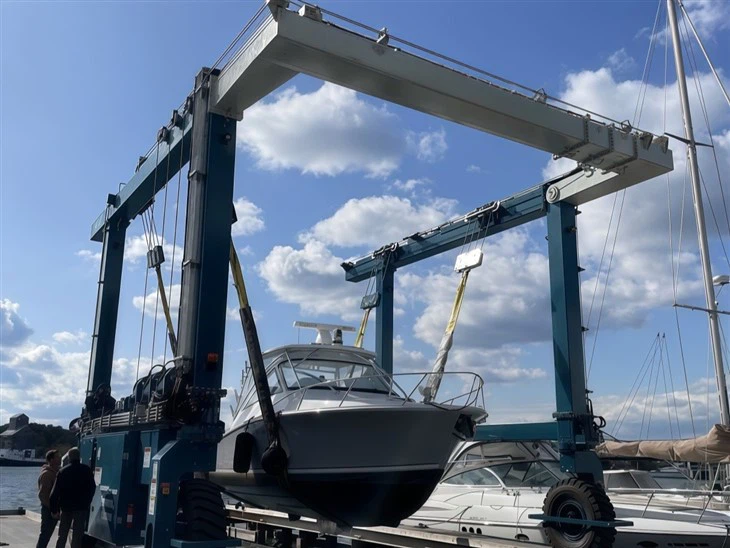


200ton Boat Lift Crane
Products Description
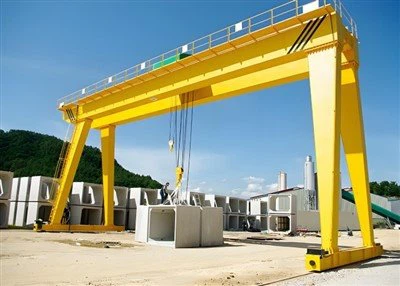
A 200-ton boat lift crane is a heavy-duty lifting system designed to hoist, transport, and launch boats, yachts, and other marine vessels weighing up to 200 metric tons. These cranes are commonly used in shipyards, marinas, dry docks, and boat storage facilities.
Key Features & Description:
Lifting Capacity
Maximum safe working load (SWL) of 200 metric tons (≈440,000 lbs).
Suitable for large yachts, commercial boats, and small to medium-sized ships.
Structural Design
Boom Type: Typically equipped with a heavy-duty lattice or telescopic boom for extended reach.
Mobility: Can be fixed (gantry crane), mobile (crawler/wheeled), or mounted on a barge for marine applications.
Stability: Outriggers or counterweights ensure balance during lifting operations.
Power & Operation
Hydraulic/Electric Drive: Smooth and precise lifting control.
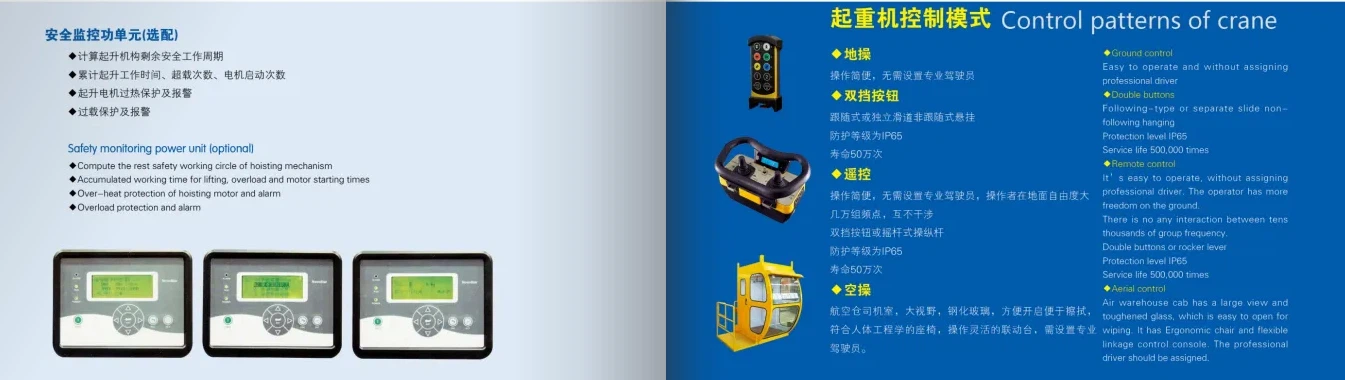
Remote/Manual Control: Operators can control the crane via a cabin or wireless remote.
Lifting Mechanism
Spreader Bars/Slings: Adjustable lifting straps or custom boat cradles for secure vessel handling.
Hoist System: High-capacity wire rope or synthetic winches with overload protection.
Comparison with Other Marine Lifting Solutions
| Feature | Small Boat Gantry Crane | Travel Lift | Forklift (Marine) |
|---|---|---|---|
| Mobility | Portable, some wheeled | Fixed or rail-mounted | Highly mobile |
| Capacity | 1–20 tons | 10–100+ tons | 2–10 tons |
| Best For | Small boats, DIY yards | Large marinas | Lightweight boats |
| Cost | Lower | Higher | Moderate |
Lifting Capacity 1 - 20 tons
Span (Width) 3 - 12 meters (adjustable)
Lifting Height 3 - 10 meters
Working Class A3-A5 (light to medium duty)
Hoisting Speed 0.5 - 8 m/min (variable)
Main Beam Type Single/double girder (box-type)
Power Supply 220V/380V 3-phase or manual
Control Mode Pendant control/wireless remote
Hoist Type Electric chain hoist/wire rope hoist
Travel Drive Manual push or motorized
Corrosion Protection Hot-dip galvanized or marine-grade paint
Wind Resistance Up to Beaufort scale 6 (for outdoor use)
Operating Temp -20°C to +50°C

Pictures & Components
A 200-ton boat lift crane is a heavy-duty lifting system designed to hoist and move large boats, yachts, or marine vessels. The key components of such a crane typically include:
1. Structural Components
Main Boom/Beam – The primary lifting arm that supports the load.
Support Columns/Frames – Vertical structures that provide stability.
Base Frame – The foundation that distributes the load to the ground or dock.
Outriggers/Stabilizers (if mobile) – Extendable arms to enhance stability during lifting.
2. Lifting Mechanism
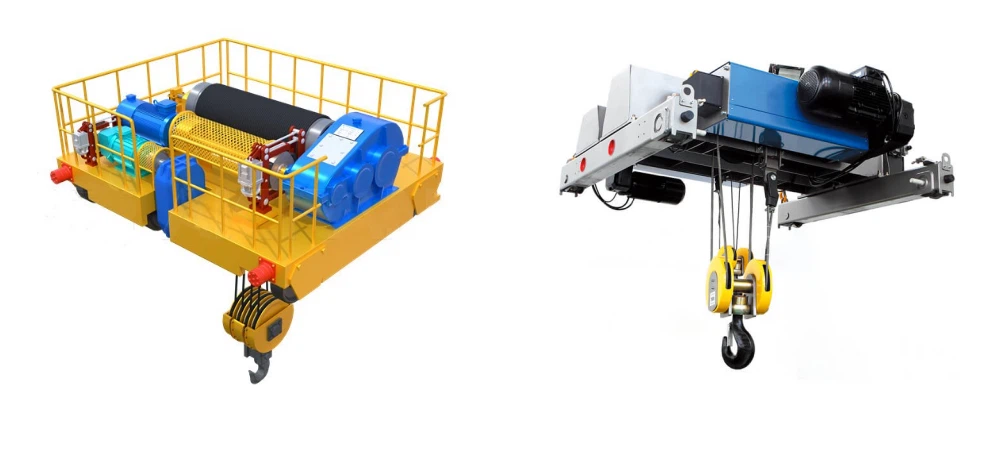
Hoist Unit – Electric, hydraulic, or pneumatic winch system with a 200-ton capacity.
Wire Rope/Cable – High-strength steel cables for lifting.
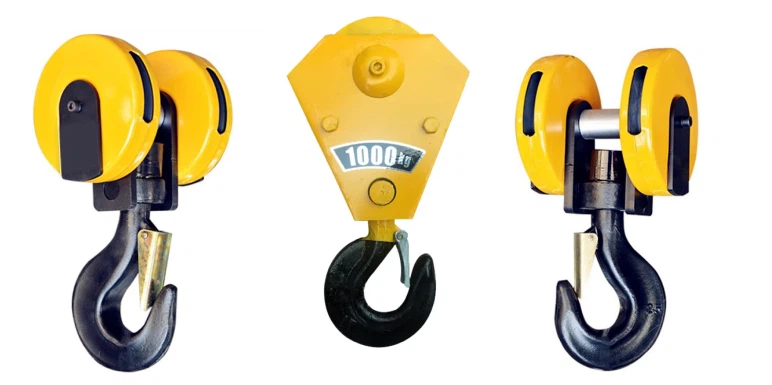
Hooks/Spreader Bars – Load-attachment points to evenly distribute weight.
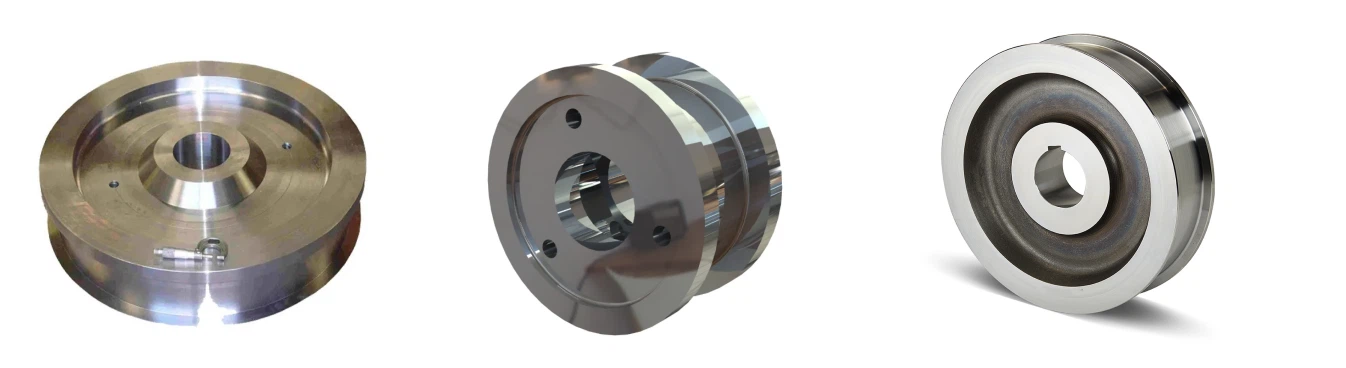
Pulleys/Sheaves – Guide the cables for smooth operation.
3. Power & Control System
Hydraulic Power Pack (if hydraulic) – Provides pressurized fluid for movement.
Electric Motor & Gearbox – Drives the hoist mechanism.
Control Panel – Operator interface for lifting, lowering, and positioning.
Remote Control (Optional) – Wireless operation for convenience.
4. Mobility & Positioning (If Applicable)
Travel Trolley – Moves the hoist along the beam (for gantry cranes).
Wheels/Tracks (for mobile cranes) – Allows repositioning.
Slew Ring (for rotating cranes) – Enables 360° rotation.
5. Safety & Monitoring Systems
Load Limiters & Overload Protection – Prevents exceeding 200-ton capacity.
Braking System – Mechanical/hydraulic brakes to secure the load.
Emergency Stop – Instantly halts operations in case of failure.
Position Sensors – Monitors boom angle and load position.
6. Boat-Specific Attachments
Boat Cradles/Slings – Custom-designed supports to prevent hull damage.
Adjustable Straps – Secures the vessel during lifting.
Spreader Frames – Distributes lifting force evenly.

B. Support Legs (End Carriages)
1. Load Capacity & Structural Design
Total Load: The end carriages must support the crane's 200-ton lifting capacity plus the weight of the crane itself (gantry, trolley, hoist, etc.).
Material Selection: High-strength steel (e.g., ASTM A572 Grade 50 or S355JR) is typically used for durability and load-bearing capacity.
Structural Analysis: Finite Element Analysis (FEA) should verify stress distribution under maximum load, including dynamic factors (e.g., 1.25–1.5x safety factor).
C. Base Frame (Runway System)
Material: Typically ASTM A36/A572 steel or reinforced concrete.
Span & Deflection:
Max deflection ≤ L/600 (where L = span length).
Use plate girders or box girders for heavy loads.
Welded/bolted connections with fatigue considerations.

2. Lifting & Hoisting Mechanism
A 200-ton boat lift crane is a heavy-duty lifting system designed for hoisting and moving large boats, yachts, or marine structures. The lifting & hoisting mechanism is critical for safe and efficient operations. Below is a detailed breakdown of its key components and working principles:
1. Main Components of a 200-Ton Boat Lift Crane
(A) Structural Framework
Boom (Fixed or Telescopic): Provides reach and height for lifting.
Mast/Tower: Supports the boom and houses the lifting mechanism.
Base/Foundation: Ensures stability, often mounted on a reinforced concrete pad or a barge for floating applications.
(B) Lifting & Hoisting Mechanism
Wire Rope & Sheaves:
High-strength steel wire ropes run through multiple sheaves (pulleys) to distribute load.
Typically uses 6×36 or 8×19 class wire ropes for heavy lifting.
Hoist Drum & Winch System:
A motorized drum winds/unwinds the wire rope for lifting/lowering.
Equipped with brakes (disc or drum type) for load control.
Hydraulic or Electric Drive System:
Electric Hoist: Uses a gearmotor for precise control (common in permanent installations).
Hydraulic Hoist: Preferred for mobile cranes due to high power density.
Hook Block & Spreader Bar:
A 200-ton swivel hook block with multiple sheaves reduces rope tension.
Spreader bars distribute load evenly when lifting wide boats.
Load Monitoring System:
Load cells or pressure sensors ensure the crane does not exceed capacity.
Anti-collision & Overload protection for safety.
Motion Control:
Slewing Mechanism (rotates the crane).
Trolley & Travel Mechanism (for gantry-style cranes).
2. Working Principle
Boat Positioning: The boat is aligned under the crane hook (using slings or lifting straps).
Lifting Phase:
The winch motor engages, winding the wire rope to lift the load.
Hydraulic/electric systems ensure smooth acceleration/deceleration.
Swinging/Transporting:
The crane slews or moves along rails to position the boat.
Lowering Phase:
Controlled release of the brake lowers the boat safely.
3. Safety Features
Automatic Slack Rope Prevention – Prevents rope damage.
Emergency Stop (E-Stop) – Cuts power in case of failure.
Anti-Two Block System – Prevents hook-block collision with the boom.
Storm Brakes/Wind Resistance – For outdoor installations.


4. Optional Accessories
For a 200-ton boat lift crane, optional accessories can enhance functionality, safety, and efficiency. Here are some common add-ons:
1. Load Monitoring & Safety Systems
Load Moment Indicator (LMI) – Monitors weight and prevents overloads.
Anti-Collision System – Prevents crane interference in multi-crane operations.
Wind Speed Anemometer – Alerts when wind speeds exceed safe limits.
2. Lifting Attachments
Spreader Bars – Distributes load evenly for large boats/yachts.
Custom Slings & Straps – Nylon/polyester slings for delicate hulls.
Vacuum Lifting Pads – For secure contact on smooth surfaces.
3. Mobility & Positioning
Remote Control System – Wireless operation for precision handling.
Self-Propelled Track System – Allows movement along a dock or shipyard.
Rotating Boom Head – Enhances maneuverability in tight spaces.
4. Power & Control Options
Hydraulic Power Pack – For cranes requiring independent power.
Diesel/Electric Dual-Power – Flexibility in power sources.
5. Protection & Maintenance
Corrosion-Resistant Coating – Essential for marine environments.
Automatic Lubrication System – Reduces maintenance downtime.
6. Specialized Boat Handling
Boat Cradles/Frames – Custom supports for different hull shapes.
Tilting Mechanism – Adjusts boat angle for maintenance.
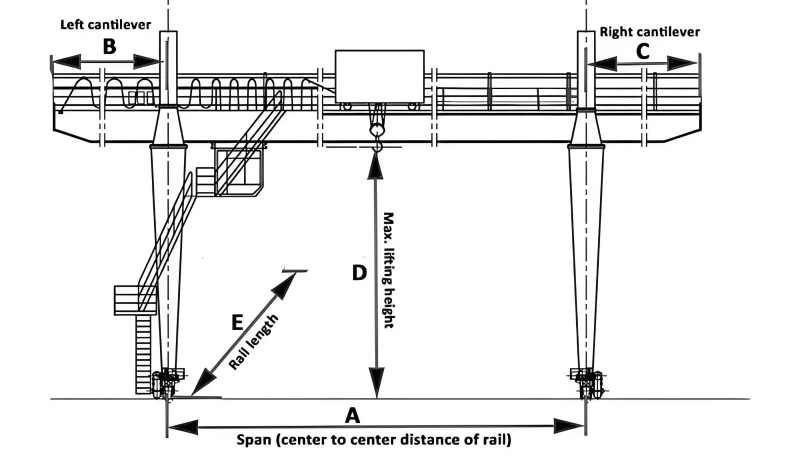
SKETCH
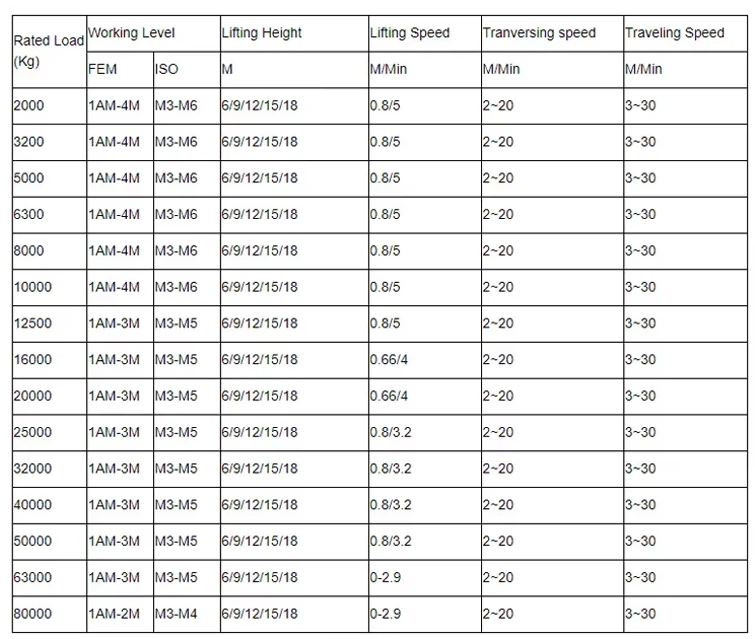
Main technical
Advantages
A 200-ton boat lift crane offers several advantages for marine applications, including boat storage, maintenance, and transportation. Here are the key benefits:
1. High Lifting Capacity
Can handle boats and yachts weighing up to 200 tons, making it suitable for large vessels.
Ideal for marinas, shipyards, and boat repair facilities.
2. Space Efficiency
Vertical storage reduces the need for large dry dock areas.
Allows for stacked boat storage, optimizing marina space.
3. Enhanced Safety
Stable lifting mechanism minimizes the risk of boat damage during hoisting.
Secure cradles or slings ensure even weight distribution.
Reduces manual handling risks compared to traditional methods like trailers or floating dry docks.
4. Quick and Easy Operation
Fast lifting and lowering speeds improve workflow efficiency.
Automated or remote-controlled options reduce labor requirements.
5. Versatility
Can be used for different boat sizes with adjustable cradles.
Suitable for various applications, including maintenance, storage, and transport.
6. Durability & Weather Resistance
Built with corrosion-resistant materials (e.g., galvanized steel) for long-term marine use.
Can operate in harsh weather conditions if designed for outdoor use.
7. Cost-Effective Maintenance
Reduces the need for dry docking, saving time and money.
Enables easier hull inspections and repairs by lifting boats out of the water.
8. Mobility Options
Some models come with wheeled or rail-mounted systems for easy relocation.
Useful for marinas with limited space or changing storage needs.
9. Reduced Environmental Impact
Minimizes underwater hull fouling by keeping boats out of the water when not in use.
Prevents pollution from anti-fouling paints leaching into the water.
10. Increased Storage Revenue for Marinas
Allows marinas to store more boats in less space, increasing profitability.
Attracts boat owners looking for safe and convenient storage solutions.
Application
Key Applications:
A 200-ton boat lift crane is a heavy-duty lifting solution designed for marine applications, including boat hoisting, shipyard operations, marina maintenance, and dry-docking. Here's a breakdown of its key applications and considerations:
Key Applications:
Marina & Boatyard Operations
Lifting large yachts, sailboats, and commercial vessels for storage, repair, or transport.
Positioning boats onto dry docks, trailers, or storage racks.
Shipbuilding & Repair
Handling ship sections, engines, and heavy components during construction or maintenance.
Assisting in dry-docking operations for hull inspections and repairs.
Port & Harbor Operations
Loading/unloading heavy marine equipment.
Salvaging sunken or damaged vessels.
Offshore & Industrial Use
Deploying buoys, anchors, and subsea equipment.
Supporting oil rig and wind turbine maintenance.
Crane production process
The production process of a 200-ton boat lift crane involves several stages, including design, material procurement, fabrication, assembly, testing, and installation. Below is a detailed breakdown of the process:
1. Design & Engineering
Requirements Analysis: Determine load capacity (200 tons), lifting height, span, and operational environment (marine, indoor, outdoor).
Structural Design:
CAD modeling for boom, mast, winch system, and support structure.
Finite Element Analysis (FEA) to ensure strength and stability.
Selection of materials (high-strength steel, corrosion-resistant coatings).
Mechanical & Electrical Systems:
Hydraulic or electric winch system design.
Motor, gearbox, and brake selection.
Control system (PLC-based for automation, remote operation).
2. Material Procurement
Steel Plates & Sections: S355, Q690 high-strength steel for load-bearing parts.
Wire Ropes & Hydraulic Components: High-grade steel cables, hydraulic cylinders, pumps, and valves.
Electrical Components: Motors, sensors, control panels, and cables.
Corrosion Protection: Marine-grade paint, galvanization, or stainless steel for wet environments.
3. Fabrication
A. Structural Components
Cutting & Shaping: CNC plasma/laser cutting for precision parts.
Welding:
Submerged arc welding (SAW) for thick plates.
MIG/TIG welding for critical joints.
Non-destructive testing (NDT) like ultrasonic or X-ray inspection.
Machining: Drilling, milling for bolt holes and fittings.
B. Mechanical Systems
Winch Assembly: Drum, gearbox, and brake integration.
Hydraulic System: Cylinder fabrication, hose routing, pressure testing.
Pulley & Sheave Manufacturing: Precision machining for smooth operation.
C. Electrical & Control Systems
Panel Wiring: PLC, HMI, overload sensors, limit switches.
Motor Installation: Synchronization for multiple winches (if applicable).
4. Assembly
Base Frame & Mast Construction: Bolt or weld main columns.
Boom Assembly: Attach lattice or box-section boom with hinges/pins.
Mechanical Integration: Mount winches, pulleys, and hydraulic systems.
Electrical Wiring: Connect motors, sensors, and control systems.
5. Testing & Quality Control
Load Testing:
Static test at 125% capacity (250 tons) to check deformation.
Dynamic test with 200-ton load to verify stability.
Functional Tests:
Smooth lifting/lowering operation.
Emergency brake performance.
Remote/automated control checks.
Environmental Tests: Salt spray test for marine applications.
6. Surface Treatment & Painting
Sandblasting: Remove rust and old coatings.
Priming & Painting: Epoxy primer + polyurethane topcoat for corrosion resistance.
Anti-Fouling Coatings (if for marine use).
7. Installation & Commissioning
Transportation: Disassemble if needed for shipping.
On-Site Assembly: Reassemble and align components.
Final Testing: Operational checks in real conditions.
Training: Operator and maintenance training.
8. Certification & Compliance
Standards: ISO 4301, FEM 1.001, EN 13001 for cranes.
Marine Certifications: ABS, DNV, or Lloyd's Register (if applicable).
Safety Compliance: OSHA, CE, or local regulations.

Workshop view:
The company has installed an intelligent equipment management platform, and has installed 310 sets (sets) of handling and welding robots. After the completion of the plan, there will be more than 500 sets (sets), and the equipment networking rate will reach 95%. 32 welding lines have been put into use, 50 are planned to be installed, and the automation rate of the entire product line has reached 85%.




Hot Tags: 200ton boat lift crane, China 200ton boat lift crane manufacturers, suppliers, factory, Casting Steel Overhead Crane, Casting Overhead Ladle Crane, Eot Crane, Single Girder Overhead Travelling Crane, Steel Factory Overhead Crane, Double Girder Overhead Cranes
You Might Also Like


Send Inquiry